
Behind the Scenes: How To Run A WEC Team
- Louis Wishlade
- Jan 9, 2021
- 3 min read
I spoke to Andy Williamson, the ex-head of operations for Prodrive, to help the average racing enthusiast understand just what happens behind the scenes of a racing team, including the tragic low of Allan Simonsen's death as well as the immense high of winning Le Mans.
Prodrive is a British motorsport and engineering group based in Oxfordshire. It designs, constructs and races cars for companies and teams, including the Aston Martin Racing team, that currently races three cars in the World Endurance Championship LMGTE class.
Prodrive has held the contract with Aston Martin since 2004, therefore, making the relationship the "second longest independent company relationship in motorsport, second only to Prodrive's previous relationship with the Subaru World Rally Team", according to Andy Williamson.
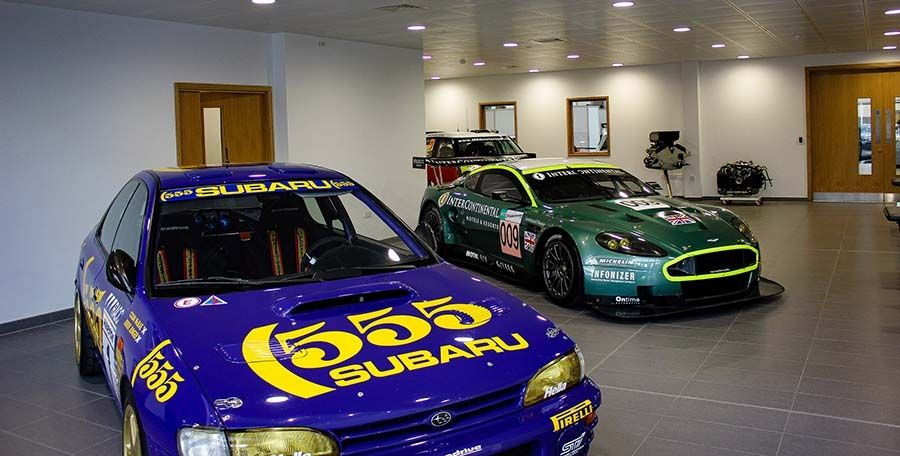
The Aston Martin GT car and the iconic Subaru World Rally car that Prodrive built and operated.
Photo credits: Glassdoor
So, just what does running a World Endurance Championship team entail? Across the many roles that Andy has performed for Prodrive since 2002, including working as an engine engineer, race engineer and head of operations, Andy states that he has held many of the roles involved in a racing team.
As a race engineer, Andy "looked after customers at the event and ran the car for them. That included everything from engine mapping, adjusting the differential and suspension set-ups and even working with the driver on tire selection and fuel loads". He continues to say, "I did this for seven or eight years and thoroughly enjoyed it, but after that I moved onto the commercial side of the business".
However, this is the side of motorsport that the fan often doesn't get to see. Andy held this more operational role for Aston Martin's venture into the World Endurance Championship in WEC, becoming Head of Operations in 2015. This meant that Andy could "run the main workshop, building all of the cars and looking after all of the people that built the parts and products for them, including the fabricators, sub-assembly team, wiring department and car build".

Inside Prodrive's workshop in Banbury, Oxfordshire, where they build the WEC cars.
Photo credit: Autosport
It goes without saying that running the operations for a large motorsport engineering company like Prodrive, that "employs 400-450 people within the business", is a mammoth task. Andy states that "operations is the glue that holds all the other functions together. You are linking all the functions, teams and groups working on the project together to make sure that everybody knows what is going on. It only takes one person who isn't on the same wavelength for things to go 'Pete Tong', and that can ruin your season."
So, what is the secret that makes everything run smoothly? "The key is communication and a culture where people can admit their mistakes. I spent most of my time being the go-between person who was thinking of all the possible outcomes and working with the teams to make sure that we had a plan in place, as well as a back-up plan for when things go wrong, which they sometimes inevitably do".
This culture emanated within the business, but also radiated outwards to their customers, bringing everyone much closer together.
"For example, one of our drivers, Allan Simonsen unfortunately passed away, killed in an accident at Le Mans very early one year. We had to continue to race as well as entertain 400 guests, when actually, we all just wanted to go home. We didn't want to be there anymore."
- Andy Williamson, former Head of Operations at Prodrive
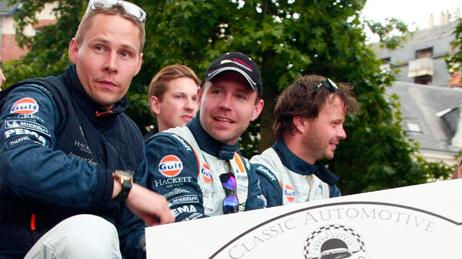
Allan Simonsen (Left) was killed in a crash just 9 minutes into Le Mans in 2013, the first death at the race since 1986.
Photo credits: The National News
"It was a really defining experience. It's something that is very hard to explain how you got through it and how we all worked as a team to get through it. It was a very team bonding experience, to go through something really tragic."
"However, then I suppose what you end up with, at the point in 2017 when we won Le Mans, where you can celebrate a win with a group of people, a lot of whom you have done the series with for three or four years with and have shared some really bad times with. It makes it that much sweeter."

Aston Martin's Le Mans winning drivers on the podium in 2017. They have won the race on five occasions since 2007.
Photo credit: motorsport.com


Comments